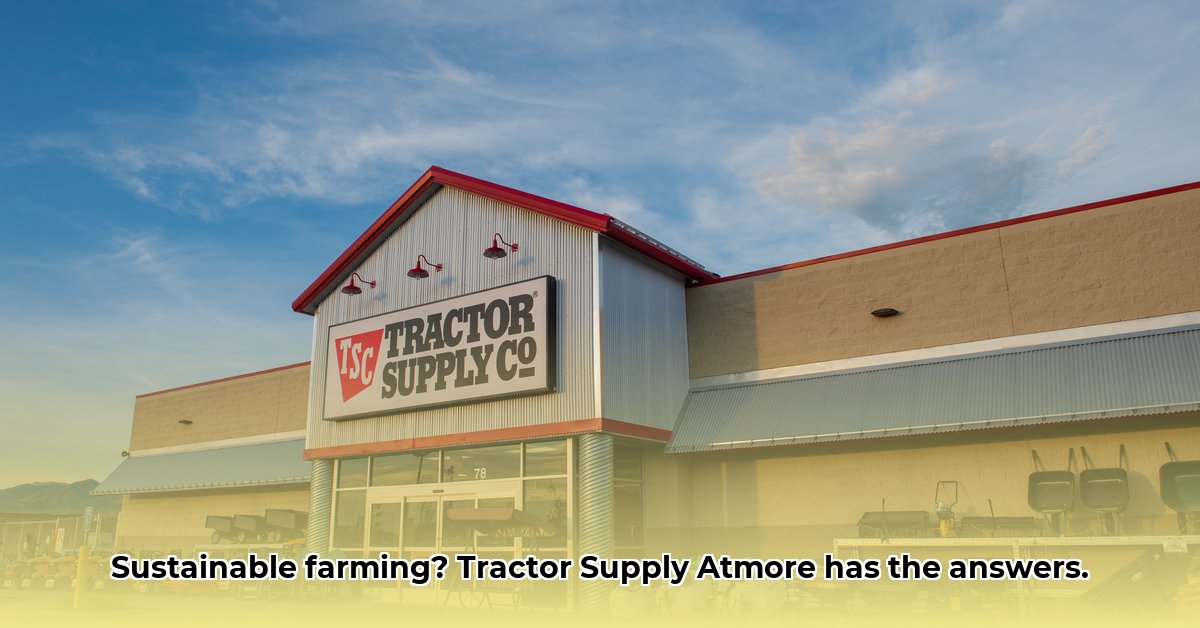
Tractor Supply (TSC) in Atmore plays a vital role in the local agricultural community. This article examines how TSC can better support sustainable farming practices, offering actionable steps for the store, local farmers, and consumers. While complete data on TSC's overall sustainability is limited, we'll focus on observable practices and potential improvements. For information on fertilizer options, check out this helpful resource: 10-10-10 Fertilizer Info.
Tractor Supply Atmore's Contribution to Sustainable Agriculture
TSC in Atmore offers various products that can facilitate sustainable farming practices. These include seeds for diverse crop varieties, promoting biodiversity, and water-conserving tools crucial for efficient irrigation in the region's climate. The availability of organic livestock feed (pending confirmation) would further enhance their commitment to environmentally responsible animal husbandry. However, a comprehensive assessment of TSC's overall sustainability requires further investigation into areas such as packaging, supply chain impacts, and overall greenhouse gas emissions. These remain largely undocumented, hindering a complete evaluation of their ecological footprint.
Challenges and Opportunities for Enhanced Sustainability
A complete evaluation of TSC's sustainability is hampered by a lack of publicly accessible data regarding their sourcing, packaging practices, and carbon footprint. This data scarcity prevents a full accounting of their environmental impact. However, considerable opportunities exist for improvement. For instance, fostering closer collaborations with local organic farms could expand the supply of locally sourced, sustainable products. Investing in employee training on sustainable farming techniques would empower staff to better advise farmers. Similarly, proactively expanding their range of eco-friendly products would cater to the rising demand from environmentally conscious consumers.
Actionable Steps for Sustainable Progress
Achieving a more sustainable agricultural future in Atmore requires a collective effort from TSC, farmers, and consumers.
For Tractor Supply Atmore:
- Comprehensive Product Review: Regularly assess the product range, prioritizing the addition of environmentally friendly options, and expanding the selection of organically sourced and sustainably produced goods. This includes exploring partnerships with local suppliers.
- Enhanced Product Labeling: Clearly label sustainable products in-store with eye-catching signage and informative displays to make eco-friendly choices readily apparent.
- Invest in Employee Training: Implement comprehensive training programs to equip staff with the knowledge to advise farmers effectively on sustainable farming practices.
- Local Partnerships: Build robust relationships with local organic farmers and sustainable producers to expand the availability of sustainably sourced products and foster environmentally responsible farming within the community.
- Transparency Initiatives: Publish a comprehensive sustainability report, detailing their efforts to reduce their environmental footprint and promoting transparency to build consumer trust.
For Local Farmers:
- Utilize TSC Resources: Regularly review TSC's offerings to identify and utilize available sustainable products.
- Seek Additional Resources: Supplement TSC purchases with other sources of certified organic seeds and fertilizers from local providers.
- Provide Feedback: Actively communicate with TSC staff, expressing the need for more sustainable products and providing feedback on their offerings.
- Collective Purchasing: Explore collaborative purchasing with other local farmers to leverage greater bargaining power and support businesses dedicated to sustainability.
For Consumers:
- Make Informed Choices: Prioritize sustainably produced and packaged products when shopping at TSC.
- Advocate for Change: Engage with TSC staff, expressing your support for sustainable practices and inquiring about their sustainability initiatives.
- Support Sustainable Businesses: Make a conscious effort to support businesses actively committed to environmentally responsible operations.
Risk Assessment and Mitigation
Several factors can impede progress towards sustainable agriculture.
| Risk Factor | Likelihood | Impact | Mitigation Strategy |
|---|---|---|---|
| Limited availability of sustainable products | Medium | Medium | Increase demand; encourage TSC to expand its offerings through partnerships and consumer feedback. |
| Insufficient staff training | Low | Low | Invest in comprehensive staff training programs on sustainable farming practices. |
| Accusations of "greenwashing" | Low | High | Ensure all sustainability claims are verifiable and transparently communicated. |
| Fluctuating consumer demand | Medium | Medium | Conduct regular market research to understand consumer preferences and adjust product offerings. |
The transition to sustainable agriculture is an ongoing journey. By fostering collaboration between TSC, local farmers, and consumers, Atmore can build a more resilient and environmentally responsible agricultural ecosystem. The future of farming hinges on our collective commitment to sustainability. What steps will you take today?